
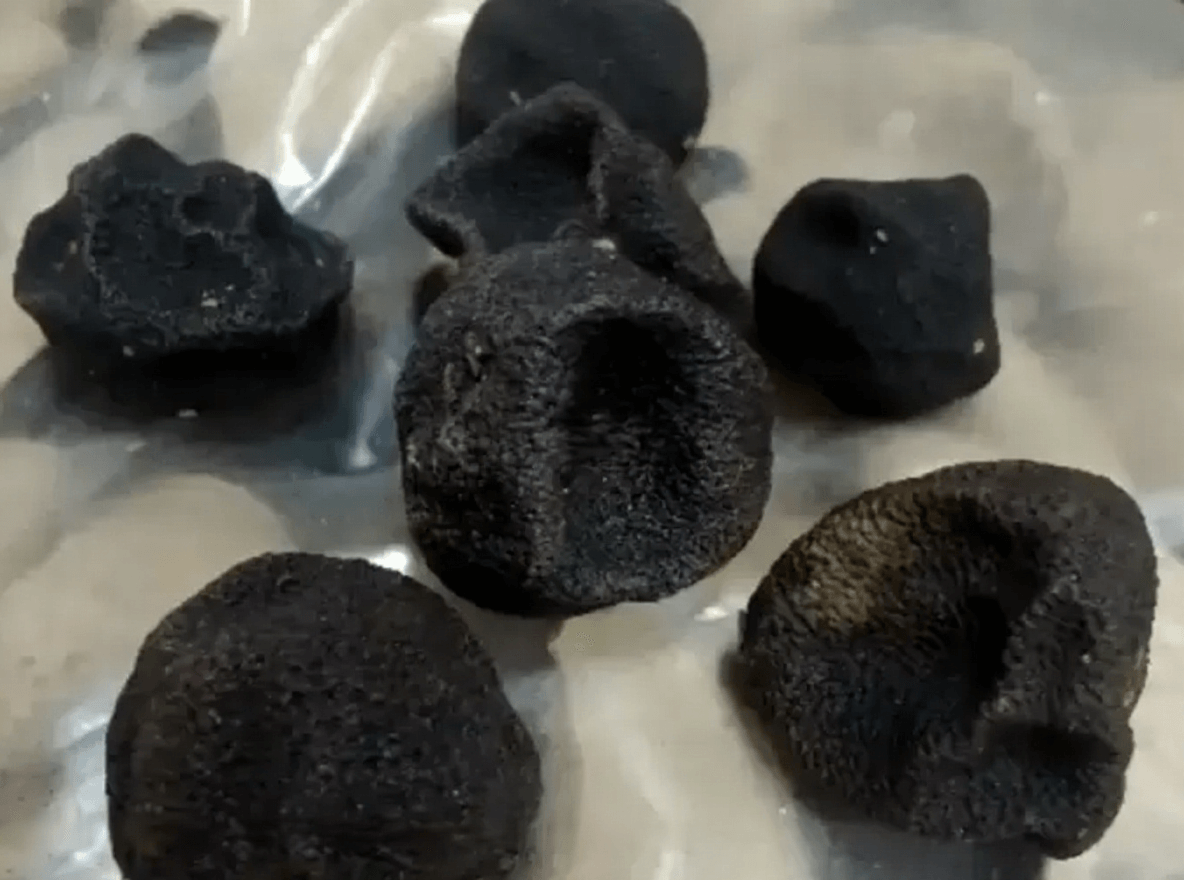
A dark or black appearance can be a result of natural aging, processing methods, or storage conditions. It should be assessed together with smell, texture, and visible mold.
Common Reasons the Peel Looks Black
- Natural aging: Dried citrus peel darkens as it ages. With longer aging, the outer surface can appear very dark, which is a common and normal change.
- Processing effects: Some traditional or medicinal-style processing involves washing, slicing, drying, and then lightly pan-firing at low heat. This can deepen the color to brown or near-black, and the taste may become more bitter and pungent.
- Artificial aging: Older peel often has a darker color, so some products may be artificially darkened to imitate higher-aged peel. In some cases, non-local peel may be aged and sold as older Pubei peel, which requires careful identification.
- Deterioration from poor storage: If stored in humid, stuffy conditions, the peel can mold, darken further, and develop visible mold spots or off-odors. This indicates spoilage.
How to Judge Whether Dark Peel Is Still Usable
- If the color is darker but there is no mold, no off-odor, the texture is dry, and the aroma is normal, it is typically a normal result of aging.
- If there are mold spots, sour or musty odors, damp or soft texture, or other clear abnormalities, it should be treated as spoiled or low quality and not used.
In short, color alone is not enough to judge quality; smell, texture, and surface condition should be assessed together.