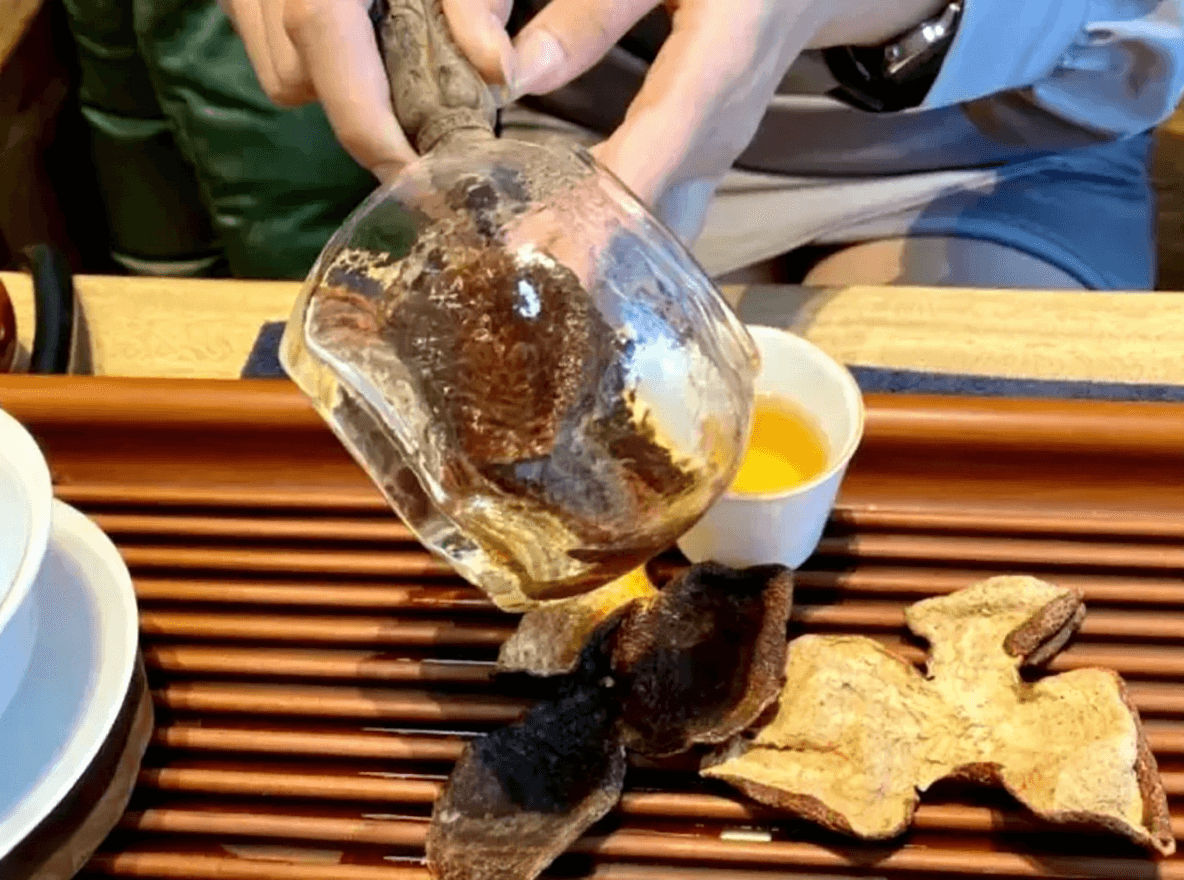
When drinking Chenpi tea, whether the taste is bitter is an intuitive standard for many to judge its quality. Although bitterness does not fully represent the quality of Chenpi, understanding the reasons behind it can help us choose Chenpi with better taste and more significant effects.
How Many Years of Aging Does Chenpi Need to Not Be Bitter?
The taste of Chenpi evolves with the increase of aging years. Generally speaking, the longer the aging time, the more complete the transformation of bitter and astringent substances, and the more mellow the taste.
- Under 5 Years: Due to the low aging years, the volatile oils contained are quite pungent, and the taste often has obvious spiciness, bitterness, or sourness. This type of Chenpi is more suitable as a seasoning for soup and cooking.
- Over 5 Years: As years increase, the bitterness gradually fades, and the aged aroma becomes increasingly rich.
- 5-10 Years: Chenpi in this stage basically meets the needs for daily water steeping, with very little bitterness, a sweet taste, and medicinal effects entering a better stage.
Common Reasons for Bitterness in Chenpi Tea
In addition to aging factors, the following four aspects are also key to causing bitterness in the tea:
1. Excessive Steeping Time
Chenpi contains certain bitter substances. If steeped in hot water for a long time (especially when boiling), these substances will be excessively released, leading to an increased bitterness in the tea.
2. Insufficient Aging Years
New peels of 1-3 years have a stimulating fruity aroma and high acidity; Chenpi of 3-5 years may still have obvious bitter, sour, and astringent tastes when brewed. It is recommended to choose varieties aged for at least 5 years.
3. Too Much Tea Leaf
Brewing is about proportion. If too much Chenpi is used with insufficient water, the high concentration will naturally lead to a bitter taste. It is recommended to add an appropriate amount according to the size of the container.
4. Differences in Peel Types
The harvest time determines the characteristics of Chenpi:
- Green Peel (Qing Pi): Harvested when the fruit is immature, the internal substances are more pungent and dispersive, and the bitterness is most obvious.
- Yellow Peel and Red Peel: The fruit has high maturity and relatively sufficient sugar, and the taste becomes sweeter after aging.
Summary
It is recommended to use 5-10 year Chenpi for daily steeping to obtain an excellent experience without bitterness and with a sweet aftertaste. When brewing, pay attention to controlling the steeping time and tea-to-water ratio, and choose red peels with higher maturity according to personal taste preferences to effectively avoid the trouble of bitterness.