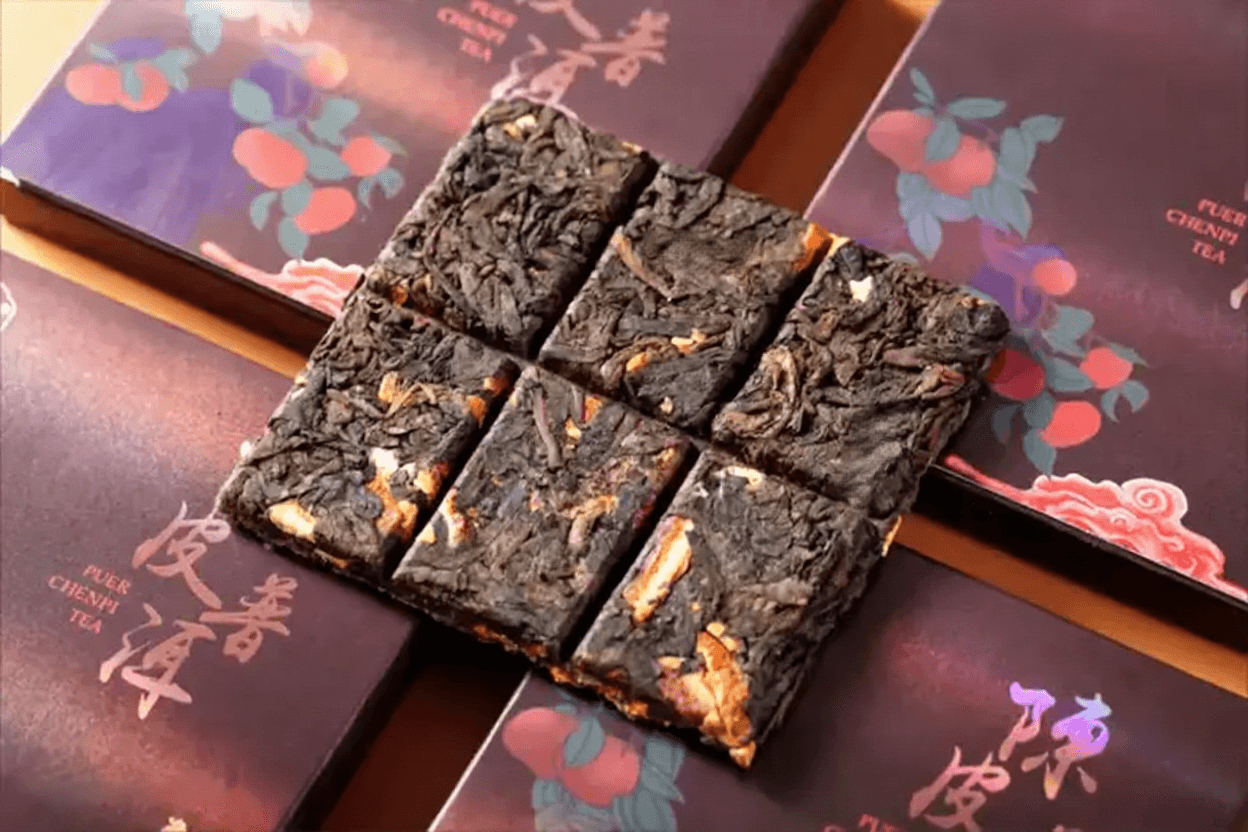
The combination of Chenpi (dried tangerine peel) and Pu-erh tea is widely recognized as a "golden pair" in the world of tea. The popular "Xiao Qing Gan" found on the market is a typical representative. They not only complement each other in flavor but also offer significant synergistic health benefits.
Health Benefits of Chenpi Pu-erh Tea
- Stomach Protection: Chenpi Pu-erh is mild in nature. The smooth and mellow tea soup forms a protective layer on the stomach lining, helping to nourish the spleen and stomach.
- Weight Loss Support: Pu-erh tea has metabolic-regulating properties. Combined with Chenpi's qi-regulating function, long-term consumption assists in weight management and lowering blood lipids.
- Resolving Phlegm and Soothing Asthma: Chenpi excels at resolving phlegm, and Pu-erh moistens the lungs. Together, they effectively soothe respiratory discomfort.
- Cardiovascular Protection: This tea helps enhance vascular contraction and plays a positive auxiliary role in preventing cardiovascular diseases.
Raw Pu-erh or Ripe Pu-erh?
- Pairing with Raw Pu-erh: Chenpi effectively reduces the slight bitterness and astringency of raw tea. Its warm nature neutralizes the relatively intense properties of raw tea, making the brew more balanced.
- Pairing with Ripe Pu-erh: This is the most classic pairing. The fresh aroma of Chenpi perfectly masks any "pile fermentation odor" in ripe tea. Both share a smooth, mellow texture, making for the most harmonious flavor.
Detailed Brewing Steps
- Taking Tea: Break off an appropriate amount of tea from the edge of a Chenpi Pu-erh cake (or use one Xiao Qing Gan). Suggested: 7g for 3 people, 10g for 5 people.
- Warming the Vessel: Rinse the gaiwan and tea cups with boiling water to raise the temperature, which helps release the aroma.
- Placing Tea: Put the measured tea into the gaiwan.
- Brewing: It is recommended to use 100°C boiling water. High-quality Chenpi Pu-erh is rich in substances; boiling water effectively extracts its aged fragrance and medicinal properties.
- Serving: After an appropriate steeping time, pour the tea into a fairness cup and serve.
Chenpi Pu-erh tea improves with age, making it a high-value wellness tea suitable for both long-term collection and daily enjoyment.