Many Chenpi enthusiasts find that boiled Chenpi water is more fragrant and mellow than steeped water. However, choosing the right equipment is crucial for enhancing the texture of the brew. With various materials available, which one is best for boiling Chenpi?
Analysis of Common Teapot Materials
1. Ceramic/Clay Pots (Best Flavor)
Ceramic pots are the classic choice for boiling Chenpi. The clay material has good breathability, making the resulting Chenpi water smoother and thicker, effectively stimulating the aged aroma.
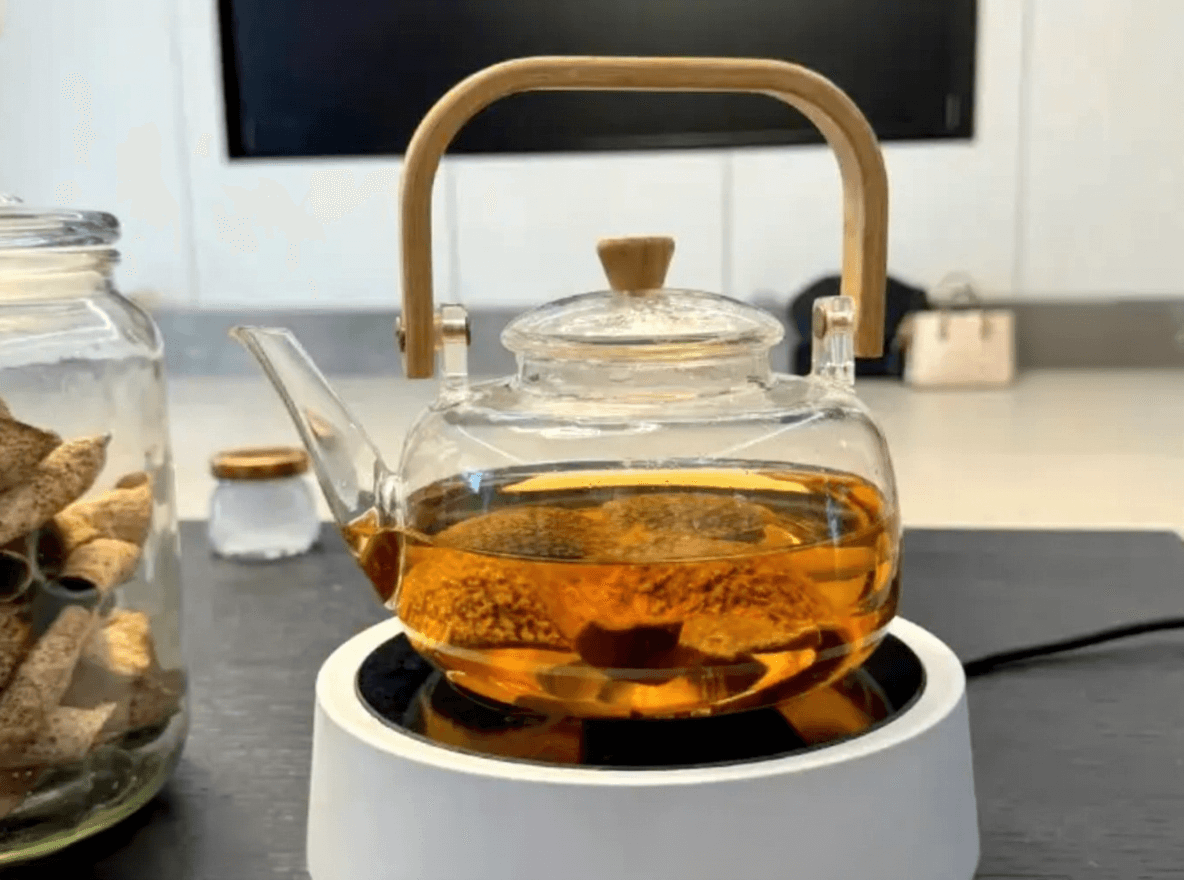
2. Glass Teapots (Best Visibility and Convenience)
Glass teapots are very popular among modern tea drinkers.
- Pros: The transparent design allows for easy observation of color changes and boiling status; they are affordable, easy to clean, and do not absorb odors.
- Advice: Ideal for beginners to visually master the brewing depth.
3. Iron Kettles
Iron kettles can release trace elements (ferrous ions) into the water, which is beneficial for health. When using an iron kettle, it is recommended to pair it with an electric ceramic stove for stable temperature control.
4. Aluminum Pots (Not Recommended)
Special Note: Using aluminum teaware is not recommended. Aluminum particles may be released during heating, and long-term ingestion can be harmful to the central nervous system.
How to Boil a Delicious Cup of Chenpi Water
- Cold Start: Place an appropriate amount of Pubei Chenpi into the pot and add cold water (about half the pot's capacity).
- Bring to a Boil: Cover and bring to a boil over high heat.
- Simmer and Steep: After boiling, turn to low heat or turn off the heat and let it steep for 3-5 minutes.
- Pour Promptly: The boiled water should be poured out as soon as possible to avoid over-steeping the peel, which can cause the tea to turn bitter.
Brewing Tips
- Stove Choice: When using an electric ceramic stove, you can adjust the power to achieve a gentle simmering effect.
- Best Time to Drink: To ensure the best taste, it is suggested to finish the boiled Chenpi water within 20 minutes.
- About Yixing Purple Clay Pots: While excellent, purple clay pots have strong absorption properties and are difficult to clean if small Chenpi fragments get stuck. Therefore, they are not the first recommendation for daily boiling of Chenpi water.