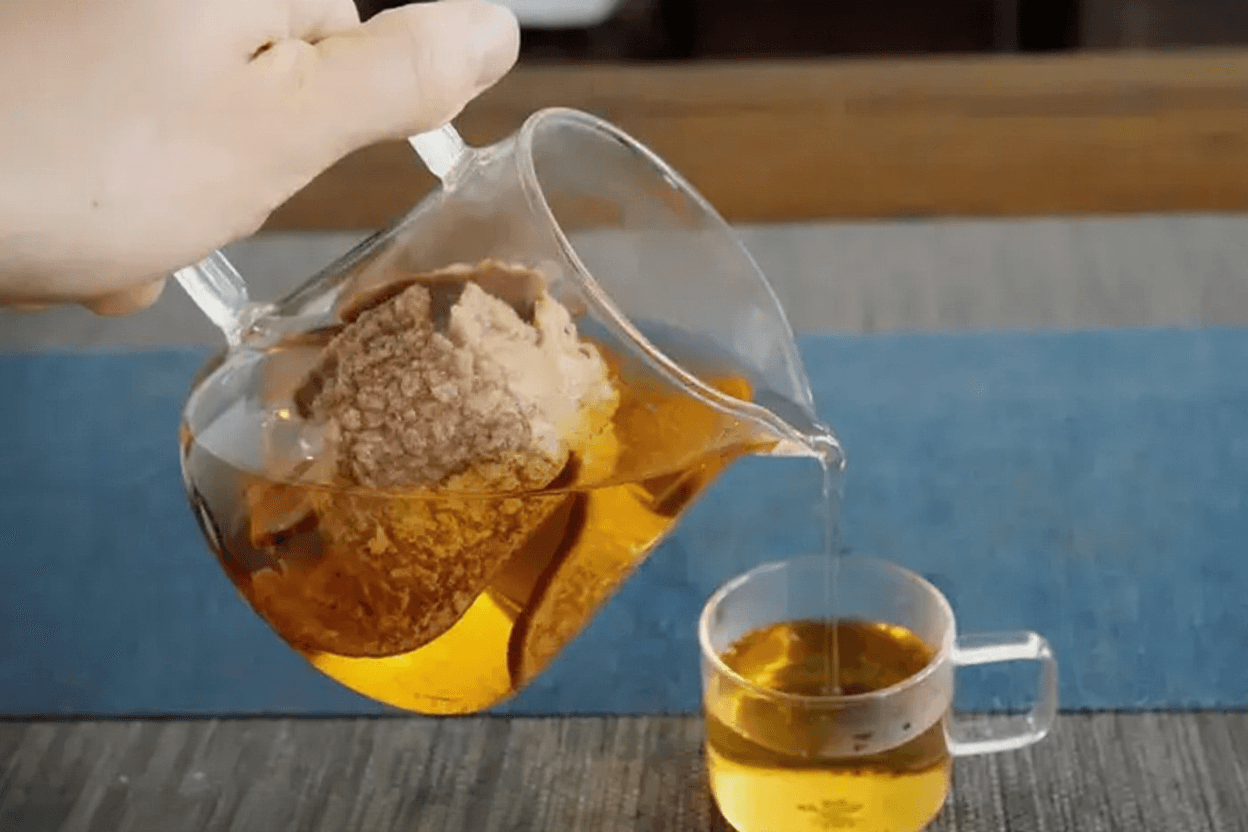
When drinking Chenpi (dried tangerine peel) water, many beginners ask: "Do I need to add sugar to make it taste good?" In fact, high-quality Chenpi has its own natural sweetness.
Do You Need to Add Sugar?
The answer is: No.
- The Truth of Taste: Well-aged, authentic Pubei Chenpi should taste sweet, fragrant, and mellow, with very little to no bitterness. If your Chenpi tastes extremely bitter, it is likely not a high-quality, aged product.
- Special Cases: If you are using younger peels or prefer an extra sweet and moist sensation, adding a small amount of honey or rock sugar is fine, but it is certainly not a requirement.
"The Universal Harmony Herb": Best Pairings for Chenpi
Chenpi is highly regarded for its incredible compatibility, working with various ingredients to produce "1+1>2" wellness effects:
- Pairing with Tea:
- Chenpi White Tea: Clears heat and moistens dryness with a refreshing taste.
- Chenpi Pu-erh: Warms the stomach and removes greasiness with a lasting richness.
- Pairing with Herbs:
- Chenpi Rose Tea: Regulates qi, relieves depression, and enhances beauty.
- Chenpi Chrysanthemum: Brightens eyes and balances the warm nature of the peel.
- Pairing with Tonics:
- Chenpi Lemon: Generates fluids and is rich in Vitamin C.
- Chenpi Monk Fruit (Luo Han Guo): Excellent for throat care and cough relief.
Summary of Core Efficacy
- Resolving Phlegm and Relieving Cough: Its warm and bitter-pungent nature targets the Lung meridian, effectively alleviating coughs and hoarseness.
- Strengthening Spleen and Appetizing: Stimulates gastric secretion, relieving poor appetite and bloating.
- Stopping Vomiting and Diarrhea: Regulates qi to manage nausea and digestive issues.
Summary Advice: High-quality Chenpi is excellent when brewed alone. If you seek diverse benefits, feel free to blend it with white tea, Pu-erh, or various fruits and flowers. As long as you choose the right peel, every sip is a gift of time.