When preparing boiled Chenpi (dried tangerine peel) water, many wonder if it needs to be soaked in boiling water like other dried ingredients. The answer is: Long soaking is not necessary, but "waking up the peel" is essential.
Why Soaking Is Not Advised
If Chenpi is soaked in boiling water for a long time, its precious medicinal components and volatile oils will seep into the water prematurely. Since the first soak usually contains dust and impurities accumulated during aging and must be discarded, long soaking results in a significant loss of efficacy and flavor.
"Waking Up the Peel" Is Key
While long soaking is discouraged, a quick rinse with boiling water (waking up the peel) is indispensable:
- Cleaning: During years of aging, Chenpi inevitably collects trace amounts of dust.
- Awakening: Quickly rinsing the surface with boiling water removes impurities and uses the instantaneous high temperature to "awaken" the restrained aged fragrance, ensuring a purer taste in the subsequent brew.
Steeping vs. Boiling: Which Is Better?
The choice depends on the age of the Chenpi:
- Young Chenpi (3-8 years): Steeping is recommended.
- At this stage, the peel contains more bitter substances (limonoids). Steeping allows for a slower release of substances, resulting in a fresher taste with less bitterness.
- Aged Chenpi (10+ years): Boiling is recommended.
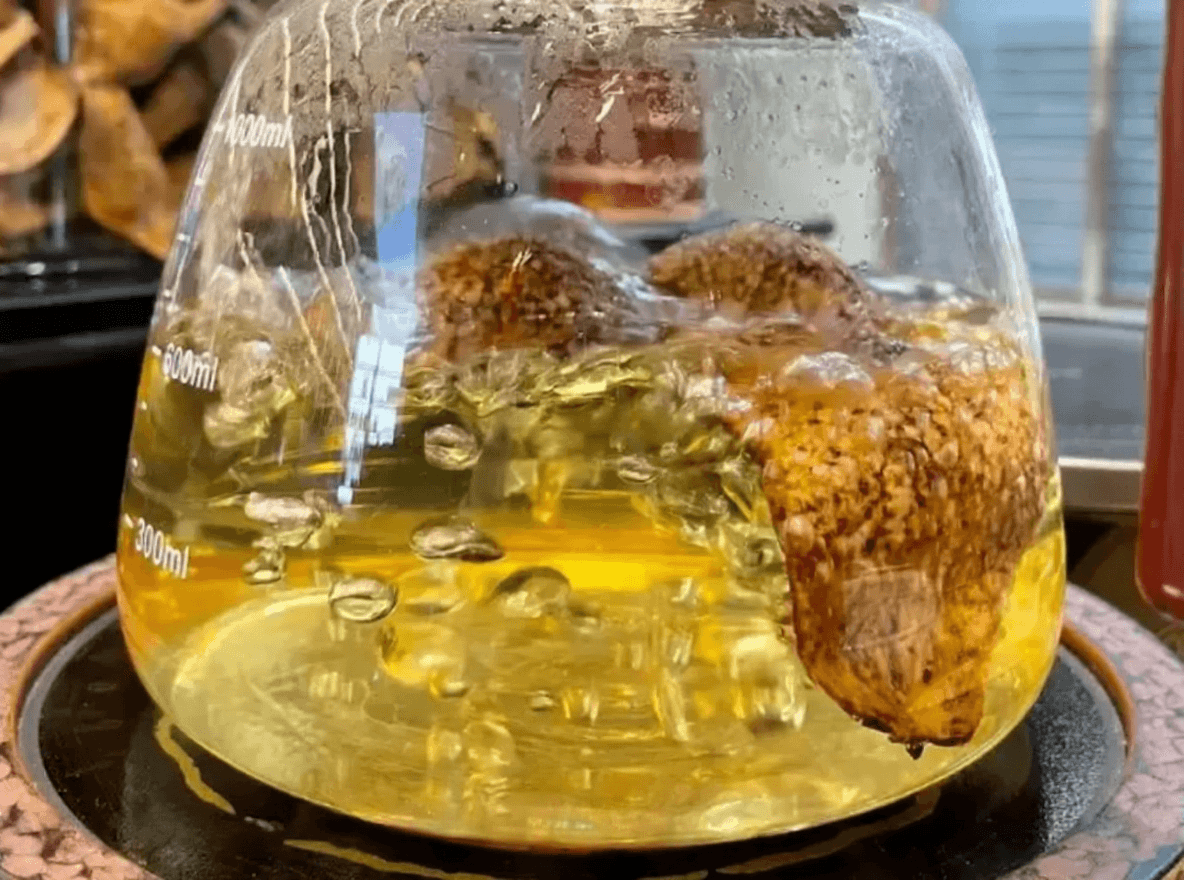
- As years pass, the peel becomes extremely dry and its internal substances more restrained. Normal steeping struggle to fully activate the deep aged aroma and medicinal properties. Continuous boiling allows these nutrients to extract fully, creating a more mellow and thick soup.
Summary: Whether boiling or steeping, remember to rinse the peel quickly first. Steep young peels and boil aged ones to fully enjoy the best flavors of Pubei Chenpi.