
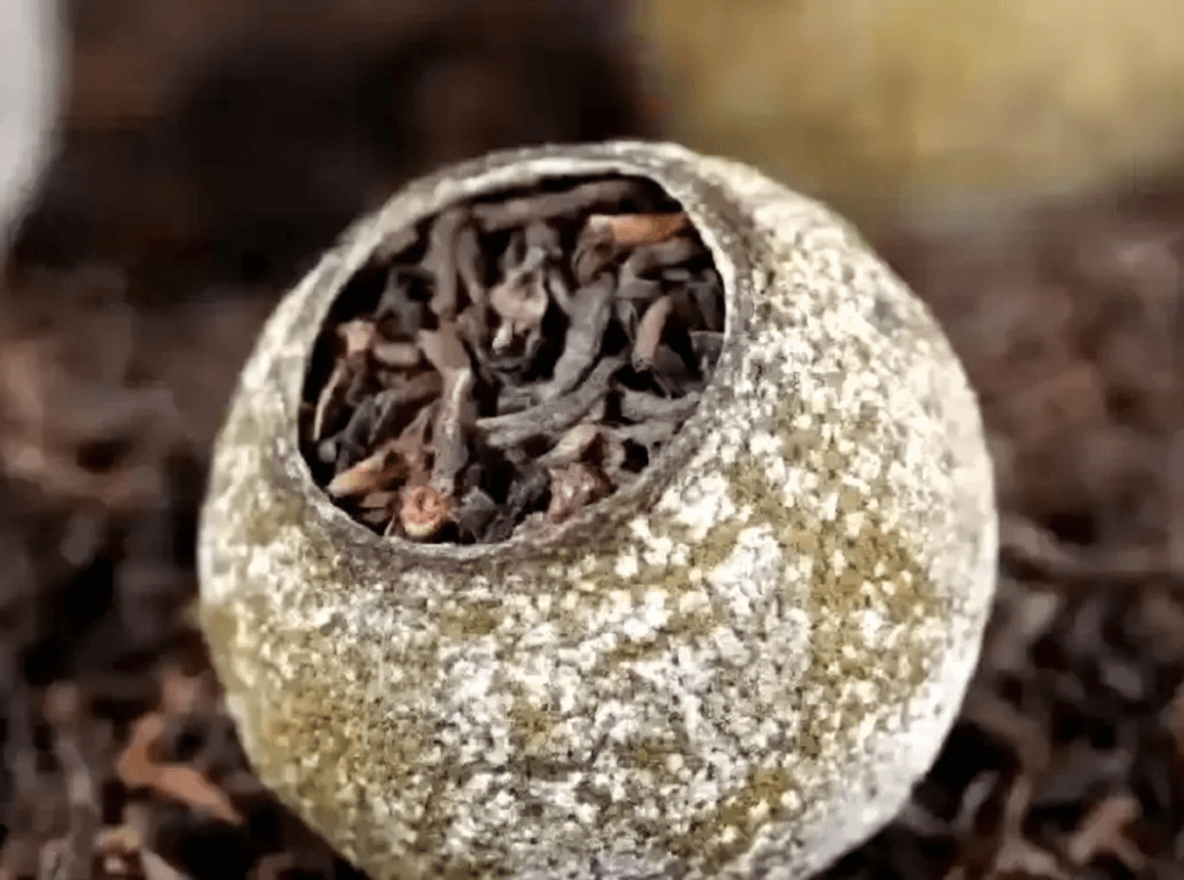
When purchasing or storing Chenpi Pu-erh tea (especially Xiao Qing Gan), a thin white layer often appears on the surface. Many tea drinkers immediately think it's mold, but this is usually a natural phenomenon of high-quality citrus tea—Tea Frost (also known as Citrus Oil Crystals).
Why Does "White Frost" Appear?
- Crystallization of Citrus Oils: This is the primary reason. In Xinhui, the home of Chenpi, this is called "Gan You Jing." When the citrus peel is roasted at high temperatures or aged for a long time, the rich volatile oils seep out and crystallize on the surface. Xiao Qing Gan has the highest oil content, making it most prone to frosting.
- Microbial Action: Natural moisture and sugars in the tea form metabolic products through beneficial microbes under specific temperature and humidity. These substances are harmless and can inhibit the growth of pathogenic bacteria.
- Natural Oxidation: During production and aging, the mixing of citrus peel and Pu-erh tea leads to oxidative reactions that result in these crystalline precipitates.
Is Having White Frost a Good Thing?
The answer is: Usually, yes.
- Sign of Aging: The presence of frost often indicates that the Chenpi Pu-erh has reached a good degree of aging. Over time, benign chemical transformations make the tea more mellow and fragrant.
- Quality Indicator: Generally, citrus fruits with rich oil glands and from excellent origins are more likely to frost. Therefore, the amount of frost is often used as a positive indicator of quality and aging potential.
How to Distinguish Frost from Mold?
While frost is valuable, one must be wary of mold:
- Appearance: Frost is a uniform powdery coating that adheres to the skin; mold often appears in spots and may have brownish-yellow or dark green colors.
- Aroma: Frosted tea smells of pure citrus; moldy products have a pungent musty, sour, or bitter smell.
- Texture: Frost does not fall off easily and the peel remains hard; mold is loose and might make the peel soft.
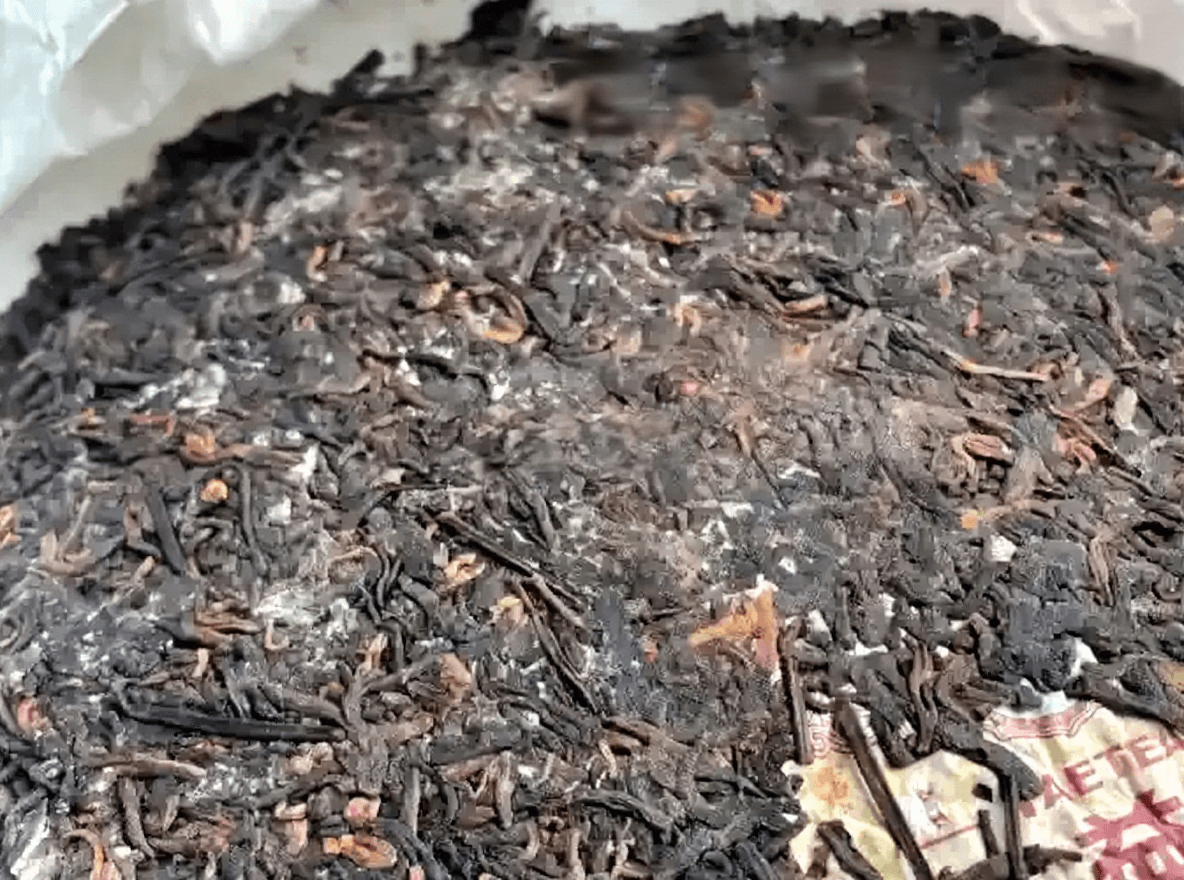
Summary: If you see white powder on Chenpi Pu-erh that smells fragrant and is evenly distributed, it typically means you have a high-quality tea with good aging and rich citrus oils. Enjoy it with peace of mind.